

Ten Greatest Alcohol Icons
of All Time
The Striding Man
All Dressed Up and Somewhere to Go
Johnnie Walker Scotch Whisky
Johnnie Walker’s first foray into print advertising left
something to be desired: the 1883 illustration featured a broken-hearted
Scot boo-hooing over a bottle of whisky smashed at his feet.
The exercise-obsessed dandy
who would lead Johnnie Walker to the pinnacle of scotch
supremacy didn’t
hit the ground walking until 1909. Modeled after the company’s
founder, John “Johnnie” Walker,
the character was drawn by famed illustrator Tom Browne
under the direction of George Walker, John’s grandson. Initially
called “The
Regency Buck,” the icon’s moniker was later toned down
to the more descriptive (if less dashing) “The Striding Man.” The
family name had more than a little to do with the logo’s ambulatory
nature.
Why It Worked: His top hat,
walking stick, breeches and riding boots promise a refined
product for an upscale market. Combine that with his elusiveness
(yes, he can see you fine through his solid-gold eyeglasses,
he simply doesn’t
have time to dally with the likes of you) and it makes for
a very attractive symbol for the rung-climbing careerist
set with money to spend. This formula also dovetails
nicely with Johnnie Walker’s
ladder of incrementally expensive color-coded whiskies.
Evolution: During
the 1950s The Striding Man took a break from pounding the
pavement for a bit of sport, appearing in adverts engaged
in the gentlemanly pursuits of golf and billiards.
He hit the bricks shortly thereafter and remained relatively
unchanged until very recently. All
that pacing must have helped him think, because he presently
seems to have solved the riddle of invisibility (see
right.)
If you thought he the was hard to pin down before, try to
catch him after he strips down. Why the change? Graphic
artists are ever striving to make marketing symbols simpler,
and thus more easy to recognize. And in this case you’re
going to have to recognize him by his threads, because his
face has vanished.
Dark Secret: Was once a bootlegger. During America’s
bout with prohibition, the distillery engaged in what they called
their “special trade,” that being the delivery of boatloads
of their whisky into the hands of rumrunners working from small Canadian
isles near the U.S. coast.
Claim to Fame: Aside from dominating the world-wide
Scotch market, Johnnie Walker is Superman’s choice of liquor.
The Hamm’s Bear
Perhaps a Little Too Happy?
Hamm’s Beer
The joyous bear haunting baby-boomers
dreams was conspired by Ojibwa Indian Patrick DesJarlait
in 1952. Though his name was never revealed on air, around
the brewery he was called Sascha, after the brewery founder’s
wife. Which must have thrilled her no end — what woman wouldn’t
want to be the namesake of an obese male bear?
Being saddled with a chick name didn’t seem to bother
Sascha much. He spent most of his time dancing and getting into weird adventures
with the other animals of the forest, to the point one wonders if there was
something other than fish in the “Sky Blue Waters.”
The wildly-popular commercials employed plot devices
ranging from good old-fashioned fun like pie fights and
log rolling to more risque activities, such as train robbery,
gunplay, arson, and gleeful wolf-abuse. The spots would
saturate the airwaves for over 30 years, which is especially
impressive when you consider Spuds MacKenzie lasted less
than three.
Why It Worked: Most beer commercials of the day
involved some shill bragging about how good their product
was, while the Hamm’s spots
came equipped with humor, plot and punch line. The occasional interaction between
cartoons and real actors was ground breaking—Sascha beat Roger Rabbit
to the punch by 40 years.
Evolution: Sascha’s appearance
didn’t
vary a great deal, aside from slicker graphics and the transition
from B&W to color. He sired a cub at one point and eventually
learned to speak (his sole utterance: “It bears repeating”).
The only major mutation was the occasional Pinocchio-esque
transformation into a real bear.
Sascha was eventually
and inevitably slain by do-gooders who claimed he was hustling
beer to children. The monstrous amount of Sascha-related
ephemera cranked out during his long reign has become quite
collectable, and the lovable mammal is still celebrated
by The
Hamm’s
Club, which throws a yearly convention.
Dark Secret: Was probably a stoner. All
the signs are there: perpetually goofy grin, impromptu hippie-style
dancing at the sound of drums, and militant veganism (his single
attempt to break his diet with a little fish concluded with him shooting
a hole through the bottom of the boat.)
Claim to Fame: Sascha eventually
reached such heights of popularity-inspired hubris that
he felt compelled to step into the ring with undefeated boxing
legend Rocky Marciano (Rocky remained undefeated at the
end of the commercial.)
Captain Morgan
Preening Pirate or Bloodthirsty Buccaneer?
Captain Morgan Original Spiced Rum
He may appear a bit of a fop on the bottle,
but the real Captain Morgan was cut from a rougher swath
of cloth. Captain Henry Morgan (1635-1688) was a Welsh privateer
who won English knighthood and historical renown for his
daring (and quite bloodthirsty) attacks on Spanish colonies
and shipping.
He was also a notorious drunkard.
While pirating, and during his stint as the Deputy Governor of Jamaica,
he drank rum by the gallon and was a dedicated habitue of the rough-and-tumble
taverns of whatever port he might find himself in. He eventually
drank himself into his grave.
Why It Worked: Pirates enjoy the
same privileged status in the popular consciousness as ninjas,
mafioso and gunslingers. At once flamboyant, murderous and
disdainful of authority, the pirate was the ultimate rebel.
And what red-blooded drunkard hasn’t
yearned to sail the high seas in search of rum, wenches,
and adventure?
Evolution: In
the initial 1950s adverts, the Captain appeared unarmed
and with his hat respectfully doffed (he was often found
in the company of high-society types), but the homicidal gleam in
his eye was unmistakable. No doubt fantasizing about running the
gang of snobs through with his cutlass and making off with their
wives and wallets.
They started “spicing” the rum in the 1980s and the
icon became rather spicy himself. He shed his social graces, put
his hat back on, and began brandishing his sword in a menacing fashion.
The
present, more cartoonish incarnation of the Captain was
drawn by fantasy and sci-fi artist Don Maitz, and while
there is still fire in the Captain’s eyes,
it seems more the leer of a sexual predator than the bloodthirsty
gleam of a proper pirate.
Dark Secret: Though the label insinuates otherwise,
the rum has no historical connection to its namesake. The Captain
Morgan Rum Company came into existence in 1943 and didn’t
start using Morgan’s image until the early 1950s. The “original” spiced
version was introduced in 1983.
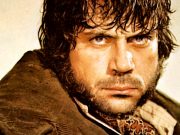
Claim to Fame: Killed legendary
drunkard and actor Oliver Reed. Reed had a heart attack
after downing three bottles of Captain Morgan’s Jamaican Rum
(along with beer and other liquors) and whipping five Royal Navy
sailors at arm wrestling in a pub on the island of Malta.
The Guinness Toucan
Who Knew What a Toucan Could Do?
Guinness Stout
After relying on word of mouth for 170 years, Guinness rolled out
its first advertising campaign in 1929. The memorable tag lines “Guinness
is good for you,” “My goodness, my Guinness,” and “Guinness
for strength,” quickly embedded in the public consciousness.
(The even more striking, though now less publicized, “Drink
Guinness for a healthy baby and painless birth” was also an
early motto.) These slogans were paired up with whimsical paintings
by artist John Gilroy, including iconic posters featuring Guinness-strengthened
chaps effortlessly hefting steel girders and pulling horse carts.
A fortuitous 1934 visit to a local zoo inspired
Gilroy to populate his art with a menagerie of animals,
including a pelican, a kangaroo, a sea lion, a turtle, an
ostrich and a toucan. The pelican was originally intended
to be the star of the group. Gilroy had an idea about encouraging
Brits to drink “a
Guinness a day,” so the pelican was pictured with its beak
loaded with seven pints, accompanied by the verse:
A wonderful bird is the pelican,
Its bill can hold more than its belly can.
It can hold in its beak
Enough for a week
I simply don’t know how the hell he can.
Which didn’t go over so well, making one
wonder if it was the word “hell” or the suspicion that
the pelican might swallow all seven pints at once that
stuck in the public’s craw. Popular mystery writer and poet
Dorothy L. Sayers, working on behalf of the advertising
firm S.H. Bensons, was tapped to pen a less offensive rhyme. No stranger
to homonyms, Sayers came up with this winning ditty:
If he can say as you can
‘Guinness is good for you’
How grand to be a Toucan!
Just think what Toucan do.
Toucan did quite well, thank you very much.
Muscling aside the foul-mouthed seabird, the exotic
understudy soon became the star of the show. It eventually
went solo and in time became synonymous with the Irish stout.
After nearly 50 years in the limelight, the toucan was retired
in 1982, though a comeback tour has been rumored: in May 2006, Toucan Brew was
introduced as part of the Guinness Brewhouse series, and its beak has lately
been poking into a number of billboards around the UK.
Why It Worked: The toucan’s
bright colors and the faraway locale it referenced were
a welcome escape from the gray days of the economic depression
of the 1930s and the wartime horrors of the 1940s. And its
incongruity certainly hooked the imagination: what in high hell was
a bizarre-looking tropical bird doing in Britain with a pint balanced
on its beak?
Evolution: Under
Gilroy’s firm hand, the
toucan’s physical appearance didn’t vary much during
its long rein, aside from its smile becoming more pronounced
and mysterious. Its pose, however, changed with
the times: it perched on a nest with its mate during the
peacetime 1930s, flew in formation during the war, and popped
a bottle cap and announced it was “opening time” during
the reconstruction of the 1950s. Like most icons, it was
never portrayed drinking the product.
Dark Secret: In the 1950s the
toucan engaged in a bit of political incorrectness: in one
ad it is seen wearing an Indian chief’s headdress and addressing
the consumer in pidgin English: “Guinness—him strong.
See what big chief Toucan do.”
Claim to Fame: A 1962 advertising
study vetted the Guinness toucan as the most recognizable
animal advertising icon in the world.
Mr. Boston
The Streetwise Dandy
Mr. Boston Distillery
The Old Mr. Boston distillery sprang to life in
1933, founded by Boston natives Irwin Benjamin and Hyman
C. Berkowitz. There was no real Mr. Boston, the icon is
merely an artist’s
conception of what a genteel 19th century Bostonian who
liked a bit of liquor might look like. He was formally introduced
to the drinking community in the inaugural 1935 edition
of the Old
Mr. Boston Deluxe Official Bartender’s Guide with this
glowing copy:
He is a jolly fellow, one of those rare individuals,
everlastingly young, a distinct personality and famous throughout
the land for his sterling qualities and genuine good fellowship.
His friends number in the millions, those who are great and those
who are near great, even as you and I. He is jovial and ever ready
to accept the difficult role of “Life of the Party,” a
sympathetic friend who may be
relied upon in any emergency.
While it’s easy to think of the beaver-hatted Mr. Boston
as Johnnie Walker’s Yank cousin, Mr. B
is by no means snooty. Far from it. Would a snob attach
his visage and reputation to a mint-flavored gin, much less
something called Wild Cherry Nectar? Assuredly not.
If anything, Mr. Boston is
a rebel, a bold innovator willing to disregard any rule
you care to set in front of him. During his long history,
the gent has not only smiled agreeably from bottles of vodka,
whiskey, rum, schnapps and gin, but also from, shall we
say, less conventional potations. Have a hankering for
Pineapple-Flavored Gin? Blackberry Liqueur? A goddamn 12-pack of “Five
Star Brandy?” Mr.
B has you covered.
Why It Worked: Though his rarefied
appearance suggests a pricey product, his portly stature,
easy-going grin, and the fact he was sometimes pictured
casually slumped in a chair suggested he was willing to hook you
up with a deal.
Evolution: Because
the distillery changed hands on a regular basis, Mr. Boston
was forced to endure a multitude of transformations. During
the youth-worshipping 1970s, “Old” was
dropped and he became progressively younger and more dissolute-appearing.
In the mid-'8os he vanished altogether (there were rumors
he had checked into rehab). In 1995 Barton Inc. acquired
the brand and brought back a simplified version of
the original middle-aged gent.
Dark Secret: During the 1980s Mr. Boston’s
line of budget-priced flavored brandies were a skid-row staple.
Claim to Fame: Mr.
Boston’s Official
Bartender’s and Party Guide is the best-selling cocktail
guide ever.
The Girl in the Moon
The Lunar Lady Is Watching You
Miller High Life Beer
Generations of High Lifers know her well, and they
should: she’s
been giving them the eye from the neck of The Champagne
of Beers for a century. The mysterious belle raising a toast
from the Moon was reputedly modeled on the granddaughter
of company founder Frederick Miller. In her first appearance
in 1903 she stood tippy-toe on a crate of beer with a whip in her
hand, apparently working as an animal tamer of sorts. She traded
the whip for a tray of beer shortly thereafter and seemed doomed
to remain in that uncomfortable position until A. C. Paul, of Miller’s
marketing division, got lost in the woods during an outing
and had a “vision” of
a “girl in the Moon” pointing the
way
back to civilization. Paul eventually found his way out
of the woods (perhaps after sobering up a bit) and in 1907
the Miller girl found herself with a one-way ticket to the Moon.
At its peak in 1979, High Life was the number two beer in
the land. It has since sunk to ninth place, well behind
its upstart sibling Miller Lite.
Why It Worked: Mysterious, other-worldly
and radiating gentility, the lunar lady is the very personification
of understated class, which is perfect for a lager comparing
itself to champagne.
Evolution: After ditching
the whip, beer crate and tray, the Lady has remained a citizen of
the Moon. The style of illustration has changed with the times and
she has had occasion to shift her position (and who can blame her,
that sliver of moon can’t be all that comfortable), sometimes
facing to the right, with arm dramatically outstretched toward civilization,
other times casually toasting the drinker.
Dark Secret: A high-minded but short-lived 2006
television campaign featuring a talking real-life Girl in the Moon
failed so miserably that Miller fired the responsible advertising
firm. Seems High Life drinkers preferred the Lunar Lady be seen but
not heard.
Claim to Fame: Is the longest-lived icon in the
history of American brewing.
The Blue Bull
Pop the Top, I Dare You
Schlitz Malt Liquor
Believe it or not, when Schlitz added
malt liquor to its stable in 1963, their plan was to market it to
an upscale clientele. This was before malt liquor had acquired
its rough and tumble reputation, and the marketing boys thought the
stronger, richer, less carbonated brew might appeal to the sort of
sport who imbibed imported ales in between cruising around in his
MG Midget.
A far cry from today’s 64 oz behemoths of instant
street cred, it was initially sold in dainty 8 oz cans, and print ads went so
far as to suggest you should enjoy it on the rocks with a twist of lemon. Though
they were also quick to point out it was smooth enough to sip “straight
up.” Uh-huh.
Another ad featured a wealthy matron wrapped in
pearls giggling over a tray of long-stemmed glasses bearing
a bull logo, paired with the copy: “Mildred never used to be
famous for her parties. Then she introduced Schlitz Malt
Liquor.” Yeah. Bet
it gave Mildred a big ol' boost up the social
ladder.
Unsurprisingly, this woefully misguided marketing
strategy barely survived the decade. A much more masculine
campaign kicked off in 1972 with a flurry of TV spots revolving
around the idea that popping a can of Schlitz entailed the
kind of macho excitement only a marauding 2000-lb bull bursting
through the nearest wall and ripping the shit out of everything
in sight could generate.
Why It Worked: Though the angry
bull logo was the product of happenstance rather than the
brain-child of cynical Madison Avenue types, it could well have been.
Higher-alcohol content and bolder taste demands virile and macho
imagery (see Colt .45, King Cobra, etc.) and historically, all the
way back to those bull-worshipping Minoans, nothing suggests virility
and machismo more than a bull with a bad attitude.
Evolution: The
raging bull we’ve come to
know and love appeared in Schlitz’s print advertising as early
as 1933. Why a bull? Because Schlitz Brewery heir Henry
Uihlein’s
pride and joy was a prize Brahma named Prince. When Schlitz
kicked off their malt liquor brand, the logo on the
cans was a stately bull head that wouldn’t look out of
place in a Minoan fresco (see right). Eight years later,
once they realized who their market really was,
the raging blue version made its leap onto the product and
TV screens alike. Since then the icon has changed very little,
aside from steadily growing in size on the cans and bottles.
Spin-offs of the original formula featured a change in hue
(Red Bull XL Malt Liquor), and a snarling "xtreme"
bull head with a prominent nose ring (Bull Ice).
Dark Secret: Zane, the one-ton Brahma bull featured
in the TV spots, was an eunuch. He was neutered in his youth and
reputedly was as gentle as a lamb (and one helluva an actor.)
Claim to Fame: Took the silver
in the malt liquor category at the 2004 Great American Beer
Festival. The less venerable (though equally macho)
Samurai Malt Liquor took the gold--go figure.
The Wild Turkey
The Dirty Bird Comes Clean
Wild Turkey Bourbon
According to company legend, Wild Turkey got
its name via this charming tale: In 1940, Austin, Nichols
and Co. executive Thomas McCarthy brought a jug of undiluted
high-proof bourbon to share with his friends during their
annual turkey shoot. His chums liked it so much they insisted
he bring more of that "wild
turkey bourbon” to future outings. McCarthy, a
N.Y. businessman with a background in marketing, figured
there might be a demand beyond his hunt-mates and launched
the brand in 1952.
Nothing enthralls a bourbon drinker more than
knowing the aged corn liquor he holds in his hand was conspired
by a bewhiskered 19th-century hillbilly, which explains
why bourbon distilleries spend so much of their advertising
budgets obsessing about their respective histories. Austin,
Nichols and Co. (originally a N.Y. based food distributor)
likes to hint that they can trace their liquor lineage to
1869, but the fact of the matter is they’re
adopting the history of a distiller (Ripy Brothers) they
bought out in the mid-20th century.
Though it hardly matters. Wild Turkey, under the
firm hand of master distiller Jimmy Russel, continues to
produce excellent high-proof bourbons in an era when other
distillers (see Jack
Daniels) are watering down
their liquors at the behest of marketing surveys.
Why It Worked: The wild turkey
is a crafty and, might I say, tasty creature. Benjamin
Franklin was so taken by its charms that he
wanted it to be our fledgling nation’s
national symbol instead of the bald eagle. And since Wild
Turkey doesn’t
own a deep history that would allow them to put a bewhiskered
hillbilly founder on the label, the next best thing is
an animal hillbillies might want to shoot.
Evolution: Aside from the usual simplification, the turkey
has changed very little during its relatively short history. While it appears
on the entire range of Wild Turkey products, its position and size varies somewhat:
it appears largest and proudest on the label of the 101-proof Russel’s
Reserve, and hides almost shamefully on the neck of their 60-proof honey
liquor.
Dark Secret: It may say Real Kentucky on the label,
but Wild Turkey is owned by Frenchmen. The Pernod-Ricard Group bought
the distillery in 1980, and they’re not too shy about the fact.
Says master distiller Jimmy Russell: “Wild Turkey is a little
family distillery. It’s just that the family lives in Paris.”
Claim to Fame: Was Hunter S. Thompson’s
choice of liquor. He rarely traveled without at
least one bottle in his bag.
The Jäger Deer
Shoot Me, Shoot Jesus
Jägermeister Liqueur
There is something unsettling about the
level gaze of the Jägermeister deer. While most animal icons
demurely look askance, this beast stares you directly in the eye.
It also appears to have Christ on its side, or at least on its mind.
Jägermeister is German for “expert hunter” and
if you examine the edge of the label you’ll find a German poem by Otto
von Riesenthal, which roughly translates into:
This is the hunter’s badge of honour
That he protect and nourish his game
Hunt sportingly, as is proper
And honor the Creator in creation.
So what's with all the religious
stuff? you're
probably thinking. The deer's got a neon cross stuck in its antlers
and the label's got some goofy rhyme kissing up to the Creator--what
gives?
Well, back
around the 7th Century, a pagan sportsman named Hubert was
about to bag a magnificent stag when a glowing crucifix
appeared between its antlers. And if that wasn’t
disconcerting enough, Christ himself gave a shout out, proclaiming
in a very loud voice: “Hubert,
unless you turn to the Lord and lead a holy life, you shall
quickly fall into the abyss of Hell!”
Hubert didn't need to be
told twice. He was soon ordained and spent the rest of his
life putting the arm on the local pagans and idolaters and
erecting monasteries. Then, long after he died, he became
St. Hubert, patron saint of hunters. And opticians, but
that's another story.
So, in 1935, Curt Mast, an avid hunter and inheritor
of a venerable German distillery, adapted the legend and
imagery of St. Hubert to his spanking new concoction. A
combination of 56 herbs, roots and spices, Jägermeister was
meant to be something you’d more likely keep in
your medicine rather than liquor cabinet. Early advertising
swore it was a cure for incessant coughs, digestive problems
and other common ailments. It became somewhat popular in
Germany, but that was about it.
The Jäger blitz, launched in 1970, targeted
nearly every country on the planet, and was met
with immediate success. Eschewing traditional advertising
methods, the liqueur was introduced with a clever grassroots
strategy of throwing bar parties (manned by squads of “Jägerettes”)
and sponsoring hard-drinking metal bands, including Metallica,
Pantera and Slayer. Its rapid expansion was also facilitated
by false rumors suggesting the liqueur contained deer blood
and/or heroin extract.
Evolution: The Jäger deer hasn’t changed
a hair since it appeared 70 years ago, and isn’t likely to,
so long as it maintains its stranglehold on the liqueur shot niche.
Dark Secret: Jäger creator
Curt Mast was allegedly a member of the Nazi party and fast
friends with Hermann Goering, commander of the Luftwaffe.
Claim to Fame: The de rigueur shot of
frat boys and bikers alike, Jägermeister succeeded in capturing
the highly-prized middle ground between girly and manly shots.
The Barcardi Bat
Piss Off the Bat and He’ll Bomb You
Barcardi Rum
If company legend is to be
believed (and it rarely should), a bat found its way
onto the Bacardi label in 1862 because the wife of the distillery’s
founder noticed a colony of fruit bats hanging around the
rafters of the converted warehouse that was their first distillery.
The bat was considered a noble and lucky creature by the local Cubans,
so it seemed a smart move to attach the symbol to the fledgling rum.
An alternative history, strenuously denied by Bacardi,
is that the bat got the nod because every morning distillery workers had to
fish the lucky, noble, and thoroughly intoxicated creatures out of the rum vats.
The rum found quick favor in Cuba and spread rapidly
throughout the Americas. Prohibition gave it a boost, thanks
to Cuba’s
close proximity to the U.S. coast, and by the ‘50s the
bat was flying high as the best-selling rum in the U.S.
Then came the communists. Despite the fact that
the Bacardi family helped bankroll the Cuban Revolution,
they were driven out of the country and their holdings nationalized
when Fidel Castro seized power. The Bacardi clan never
forgave this betrayal, and have used their considerable
political and financial influence to make things difficult
for Cuba ever since.
Why It Worked: The aforementioned
locals not only considered the bat good mojo, they were
also largely illiterate. They couldn’t read the verbose Spanish
praising the product on the early labels, but they could
recognize the bat just fine. When the rum spread to more
literate countries, the exotic mammal matched up well with what Westerners
thought of rum: nocturnal danger with a hint of vampirism.
Evolution: The prototype bat was
a fatter specimen, but aside from the usual streamlining, Bacardi
has remained true to the original logo.
Dark Secret: Embittered Bacardi helmsman
Jose Pepin Bosch bought a surplus B-26 bomber with the hopes of bombing
his ex-pal Fidel’s oil refineries (the bold plan was foiled
when a picture of the bomber appeared on the front page of New York
Times). He was also allegedly involved in the CIA plot to assassinate
Castro.
Claim to Fame: Bacardi was the first “civilized” rum.
The founder, Spanish emigrant Don Facundo Bacardi Masso,
tamed the raw New World spirit by experimenting with charcoal
filtering and oak barrel aging.
—Frank Kelly Rich